












Interoperability assessment
Analysis of existing radio systems, frequency plans, and operational requirements to identify the most effective interoperability architecture.
CellQual provides engineering and integration services that enable different radio networks, agencies, and organizations to communicate with each other — breaking down the technical barriers that prevent effective multi-agency coordination. CellQual assesses the specific radio technologies and protocols in use and designs an interoperability architecture that connects agencies without requiring full infrastructure replacement.
One of the most persistent challenges in emergency management, public safety, and complex operations is the inability of different agencies to communicate directly with each other. A police force may operate on a P25 trunked network. A fire service may use a VHF conventional system. A border agency may operate on an encrypted tactical radio. A utility responding to an infrastructure incident may use a digital commercial radio. In an emergency, these teams need to talk to each other, and the technology frequently prevents it.
CellQual provides engineering and integration services to address this challenge. Using gateways, cross-band repeaters, broadband PTT platforms, and network interconnection technologies from Motorola Solutions and other established providers, CellQual helps organizations build interoperability between their existing radio systems, creating the ability to communicate across agencies and technologies without replacing entire fleets.
Beyond emergency response, interoperability engineering supports joint operations, major events, infrastructure protection, border management, and any scenario where organizations using different communication technologies need to coordinate. CellQual assesses the specific interoperability requirement, identifies the right technical approach, and manages the integration engineering.

Analysis of existing radio systems, frequency plans, and operational requirements to identify the most effective interoperability architecture.

Installation and configuration of radio-to-radio and radio-to-IP gateways that connect disparate networks and enable cross-system communication.

Integration of MCPTT-compliant broadband push-to-talk platforms that allow radio, smartphone, and PC users to communicate on a common channel.
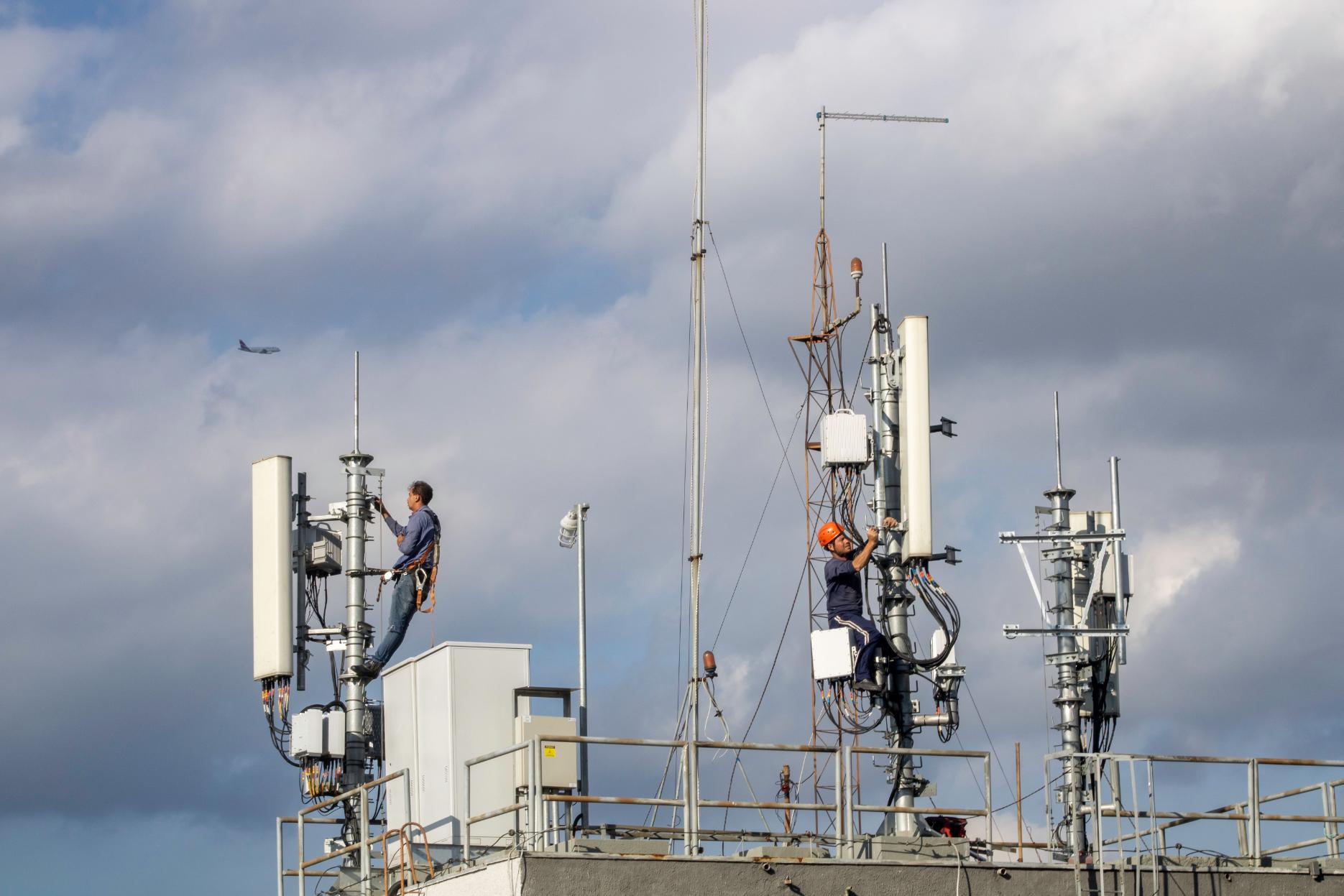
Technical solutions for bridging VHF, UHF, 700 MHz, 800 MHz, and other bands where agencies operate on different frequency ranges.
Engineering support for maintaining appropriate encryption separation while enabling necessary interoperability between secure and standard channels.
Structured interoperability testing between agencies and across all connected systems to confirm performance before live operational use.
Multiple agencies need to communicate during a joint operation despite using different radio systems.
An organization wants field staff on smartphones to communicate directly with radio users.
A control room needs a single view across radio and broadband communication.
An organization is extending communication beyond the coverage of its radio network using broadband.
Can’t find what you’re looking for? Talk to a CellQual engineer — we answer technical questions directly.
In many cases, yes. Gateway and bridging solutions can connect existing radio systems without requiring fleet replacement. The feasibility depends on the radio standards, frequencies, and encryption schemes in use. CellQual will assess the specific configuration and advise on what is achievable with existing equipment.
MCPTT (Mission-Critical Push-to-Talk) is a 3GPP standard that defines how mission-critical voice communication works over LTE and 5G networks. MCPTT platforms can connect traditional land mobile radio networks, smartphones, and PC dispatch systems onto a common communication layer, making it a powerful tool for interoperability between agencies using different technologies.
Timescales vary considerably depending on the number of agencies involved, the complexity of the radio systems, the geographic scope, and the testing requirements. A gateway integration between two agencies on compatible systems may take weeks; a national multi-agency interoperability program may take considerably longer. CellQual will provide a realistic timeline assessment as part of the initial engagement.
Planning for technology transitions is an important aspect of interoperability architecture. Gateway and broadband PTT solutions can be designed to maintain interoperability through technology transitions, providing a migration path that does not require all agencies to upgrade simultaneously. CellQual includes transition planning in interoperability assessments.
No. Radio interoperability means radios on different networks can communicate voice and data. Network interoperability means the underlying network systems share information and management capability. Both types may be required for full multi-agency coordination. CellQual assesses both dimensions when designing an interoperability solution.

CellQual can assess your interoperability requirement and design an integration approach that allows your teams and partner agencies to communicate effectively. Contact us to discuss.